2024 Men’s Conference
Men, sign up and join us on Sat. May 4th.
For lunch: Pork tenderloin served with roasted potatoes, Parmesan green beans and dinner roll – Catering by Fresh & Fancy
.

Simply Teaching The Bible Simply – A Church that's all about JESUS!
These are recommend resources that we have been personally encouraged and challenged by and hope they do the same for you. It’s been said before that great leaders are readers, and we are committed to regularly reading through our Bible and never stop learning. May the Lord bless you as you grow! -Pastor Tim Molter
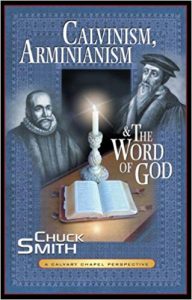
Table of Contents:
Introduction
What does it mean to be a part of the growing number of Calvary Chapel Fellowships? There are certain distinctions that cause us to stand out among other evangelical churches. We could point to our shared commitment to systematic Bible teaching or the emphasis upon love that transcends all cultural and ethnic barriers. Calvary Chapels have also been known for focus on worship, featuring contemporary music loyal to the Word of God and the desire of His people to praise their Lord. Without exception, Calvary Chapels have taken a strong stand for a pre-tribulational and pre-millennial view of the second coming of Jesus Christ. We have also expressed a steadfast love and support for the nation of Israel, its right to a historic homeland and its need for the Messiah. But most importantly, Calvary Chapel has been known for striking a balance between extremes on controversial theological issues that have often caused division rather than unity in the body of Christ.
Calvary Chapels have no desire to be divisive nor dogmatic in areas where Bible believers and teachers have disagreed. However, it is important to state as clearly as possible the doctrinal basis of our fellowship and unity with one another, especially in the area of pastoral leadership and teaching. While we welcome believers who disagree with us to our fellowship, we do encourage a measure of doctrinal understanding and unity among our pastors who teach us the truths of God’s Word.
Calvary Chapels try to avoid conclusions, terminology, and arguments which are not clearly presented in the Bible. In no area of controversy is this approach more essential than in the long simmering debate between Calvinists and Arminians. In the midst of this heated argument it is easy to ignore or neglect the plain statements of the Bible, or to believe that we have the ability to fully understand the ways of God (Romans 11:33- 36). But how tragic it is when we become more concerned with being “right” than being loving. When we discuss the ministry of the Holy Spirit, it is easy to disagree over terms such as “baptism” and “filling” and to miss the blessing and power of God’s Spirit in our lives. The way we conduct our debates and express our opinions will sometimes “quench” as well as “grieve” the blessed Spirit who dwells within the believer. In the midst of our arguments over spiritual gifts, we can miss the Biblical admonition to love, which clearly is greater than all the gifts (I Corinthians 12:31 – 14:1) Our desire is to bring believers together in the love and unity of the Holy Spirit. Our focus is on our awesome God, not on ourselves. We are committed to glorifying our Lord in all we say and do.
Perhaps no issue is as important or as potentially divisive as the doctrine of salvation, reflected in the debate between followers of John Calvin (1509-1564) and those of Jacob Hermann (1560-1609), best known by the Latin form of his last name, Arminius. Since the Protestant Reformation in the 16th Century, Christian churches and leaders have disagreed over such issues as depravity, God’s sovereignty, human responsibility, election, predestination, eternal security and the nature and extent of the atonement of Jesus Christ.
Although trained in the reformed tradition, Arminius had serious doubts about the doctrine of “sovereign grace” as taught by the followers of John Calvin. He was a pastor of the Reformed congregation in Amsterdam (1588), but during his fifteen years of ministry there, he began to question many of the conclusions of Calvinism. He left the pastorate and became professor of theology at the University of Leyden. It was his series of lectures on election and predestination that led to a violent and tragic controversy. After his death in 1609, his followers developed the Remonstrance of 1610 which outlined the “Five Points of Arminianism.” This document was a protest against the doctrines of the Calvinists, and was submitted to the State of Holland. In 1618, a National Synod of the Church was convened in Dort to examine the teachings or Arminius in the light of Scripture. After 154 sessions, lasting seven months, the Five Points of Arminianism were declared to be heretical. After the synod, many of the disciples of Arminius, such as Hugo Grotius, were imprisoned or banished. When John Wesley took up some of the teachings of Arminianism, the movement began to grow, and it affected the Methodist tradition as well as the beliefs of most Pentecostal and Charismatic churches.
Arminianism
The “Five Points of Arminianism” included the following:
Calvinism
Interestingly, John Calvin, the French reformer, did not formulate what today we know as the Five Points of Calvinism. This came out of the Canons of the Council of Dort (1618), and subsequent statements among the many Reformed Confessions have expanded upon these matters. Calvinism has been known for outstanding scholars, theologians, preachers, and reformers, men such as John Owen, George Whitefield, William Wilberforce, Abraham Kuyper, Charles Hodge, B.B. Warfield, J. Gresham Machen, and Charles Haddon Spurgeon.
Those in the reformed tradition who answered the teachings of Arminius chose the word “TULIP” as an acrostic to summarize their answer to the Five Points of Arminianism”:
Calvary Chapel’s Perspective
It is not our purpose to take sides on these issues or to divide the body of Jesus Christ over human interpretations of these Biblical truths concerning our salvation. We simply desire to state how we in the Calvary Chapel fellowships understand the Bible’s teaching regarding these matters.
Maintaining a Bible-centered balance in these difficult issues is of great importance. We do believe in the perseverance of the saints (true believers), but are deeply concerned about sinful lifestyles and rebellious hearts among those who call themselves “Christians.” We don’t have all the answers to these matters, but we desire to be faithful to the Lord and His word. If we find ourselves basing our view of salvation on the performance and attitudes of people we become discouraged and concerned. But when we keep our eyes on the Lord, and trust in Him alone and in His power, we say with Peter in I Peter 1:3-9:
“Blessed be the God and Father of our Lord Jesus Christ, who, according to His abundant mercy, hath begotten us again unto a lively hope by the resurrection of Jesus Christ from the dead, to an inheritance incorruptible, and undefiled, and that fadeth not away, reserved in heaven for you, who are kept by the power of God through faith unto salvation ready to be revealed in the last time. In this ye greatly rejoice, though now for a season, if need be, ye are in heaviness through manifold temptations, that the trial of your faith, being much more precious than of gold that perisheth, though it be tried with fire, might be found unto praise and honor and glory at the appearing of Jesus Christ, whom, having not seen, ye love; in whom, though now ye see Him not, yet believing, ye rejoice with joy unspeakable and full of glory, receiving the end of your faith, even the salvation of your souls.”
It is not easy to maintain the unity of the Spirit among us on these matters. It seems that the sovereignty of God and human responsibility are like two parallel lines that do not seem to intersect within our finite minds. God’s ways are “past finding out” (Romans 11:33), and the Bible warns us to “lean not unto thy own understanding” (Proverbs 3:5). To say what God says in the Bible – no more and no less – is not always easy, comfortable, or completely understandable. But Scripture tells us that the wisdom from above will be loving and kind toward all, seeking the unity of the believers, not trying to find ways to divide and separate from one another. May God help us all to love each other, to be kind, tenderhearted, forgiving one another as Jesus Christ has forgiven us (Ephesians 4:32)! In difficult doctrinal matters, may we have gracious attitudes and humble hearts, desiring most of all to please Him who has called us to serve Him in the body of Christ. Discussion – YES! Disagreements – YES! Division – NO!
Jesus said, “By their fruit ye shall know them.” When a particular position on the Scriptures causes one to become argumentative, legalistic, and divisive, I question the validity of that position. I seek to embrace those things that tend to make me more loving and kind, more forgiving and merciful. I know then that I am becoming more like my Lord. If you have come to a strong personal conviction on one side of a doctrinal issue, please grant us the privilege of first seeing how it has helped you to become more Christ-like in your nature, and then we will judge whether we need to come to that same persuasion. Let us always be certain to look at the fruit of the teaching.
Seek those things that produce the loving nature of Jesus in our lives. I would rather have the wrong facts and a right attitude, than right facts and a wrong attitude. God can change my understanding of the facts in a moment, but it often takes a lifetime to effect changes of attitude.
Yours in love,
Chuck Smith
How to get this resource:
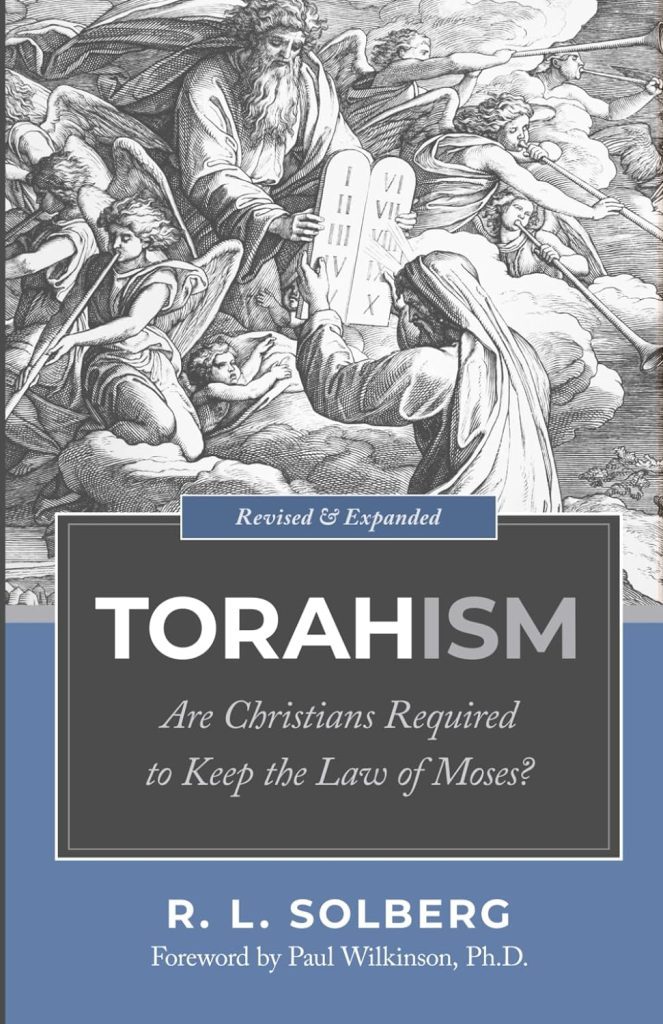
Are Christians required to keep the Law of Moses? How about the Ten Commandments? Was Jesus divine? Join R. L. Solberg in his book, Torahism, where he confronts a modern heresy and dives into these and other critical questions related to the Jewish roots of the Christian faith.
“It all began with a series of Facebook posts that an old friend posted just after Thanksgiving. He was aggressively taking Christians to task for celebrating the ‘pagan’ holiday of Christmas. This struck me as odd because I’d always known he and his wife to be strong Christians. And while I’ve debated with plenty of atheists over the alleged pagan roots of Christmas, I’d never heard this charge leveled by a fellow Christian. So I decided to chime in on his posts and soon discovered that I had stepped into a mystery of, well, biblical proportions…”
This is a great book on defending against the theology of Torahism, which teaches that all followers of Jesus, whether Jew or Gentile, are required to keep the Law of Moses. It was written to help you understand and address the teachings of movements such as Hebrew Roots, Torah-keepers, Pronomian Christianity, and Messianic Christians, which can be unbiblical, dangerous and divisive.
How to get this resource:
See if the book is available from your local library – It’s free (Minnesota Viking Library System)
Torahism (Amazon) at: https://www.amazon.com/Torahism-Christians-Required-Keep-Moses/dp/173367215X/
Torahism (Walmart) at: https://www.walmart.com/ip/Pre-Owned-Torahism-Are-Christians-Required-to-Keep-the-Law-of-Moses-Paperback%2C5209593783
Torahism (R. L. Solberg) at: https://rlsolberg.com/torahism/
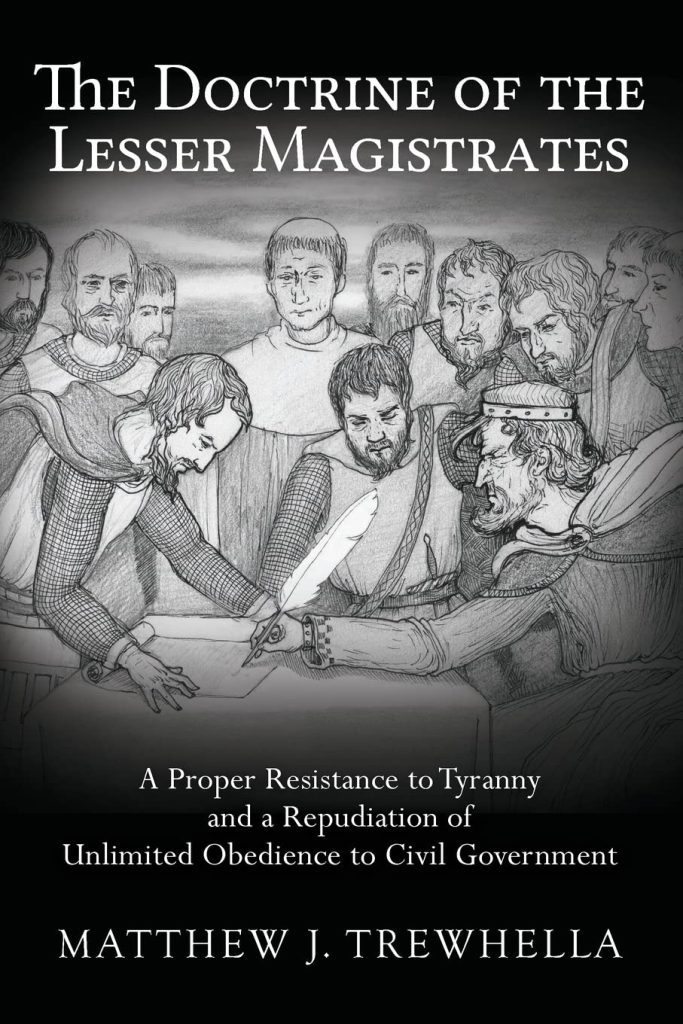
America has entered troubling times. The rule of law is crumbling. The massive expansion of Federal government power with its destructive laws and policies is of grave concern to many.
But what can be done to quell the abuse of power by civil authority? Are unjust or immoral actions by the government simply to be accepted and their lawless commands obeyed? How do we know when the government has acted tyrannically? Which actions constitute proper and legitimate resistance?
This book places in your hands a hopeful blueprint for freedom. Appealing to history and the Word of God, Pastor Matthew Trewhella answers these questions and shows how Americans can successfully resist the Federal government’s attempts to trample our Constitution, assault our liberty, and impugn the law of God.
The doctrine of the lesser magistrates declares that when the superior or higher civil authority makes an unjust/immoral law or decree, the lesser or lower ranking civil authority has both the right and duty to refuse obedience to that superior authority. If necessary, the lower authority may even actively resist the superior authority. Historically, this doctrine was practiced before the time of Christ and Christianity.
How to get this resource:
See if the book is available from your local library – It’s free (Minnesota Viking Library System)
The Doctrine of the Lesser Magistrates (ChristianBook) at: https://www.christianbook.com/magistrates-resistance-repudiation-unlimited-obedience-government/matthew-trewhella/9781482327687/pd/327687
The Doctrine of the Lesser Magistrates (Amazon) at: https://www.amazon.com/Doctrine-Lesser-Magistrates-Resistance-Repudiation/dp/1482327686
The Doctrine of the Lesser Magistrates (Defy Tyrants) at: https://defytyrants.com/store/book-the-doctrine-of-the-lesser-magistrates/